CAIRO - 4 May 2026: Minister of Planning and Economic Development Ahmed Rostom said Egypt’s current economic performance reflects a shift toward a more resilient and diversified growth model, supported by a comprehensive reform agenda and proactive policy measures.
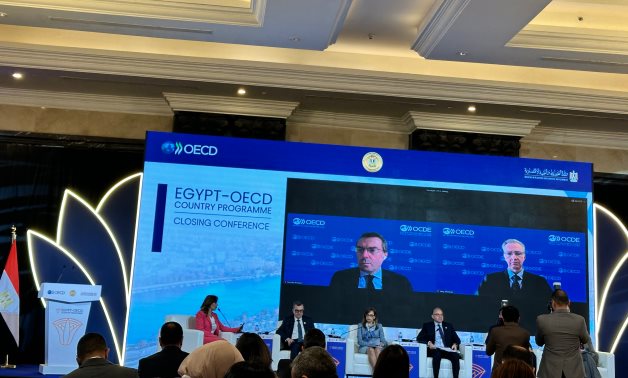
Speaking during a panel discussion on “Accelerating economic growth, competitiveness and private sector growth in the digital era” at the closing conference of the Egypt–OECD Country Programme, Rostom highlighted the economy’s broad-based recovery across multiple sectors.
He said economic growth has accelerated over six consecutive quarters, rising from 2.4 percent in FY2023/2024 to 4.4 percent in FY2024/2025, and reaching 5.3 percent in the first half of the current fiscal year.
Rostom noted that key sectors, particularly industry, communications, and tourism, have recorded strong growth, with strategic sectors such as manufacturing, trade, and construction playing a central role in driving economic activity.
He added that the resilience of economic performance is underpinned by the continued implementation of fiscal and monetary reforms, alongside efforts to advance digital transformation, entrepreneurship, and public investment governance.
Diversifying growth sources across industry, agriculture, and services has also helped strengthen the economy’s ability to absorb external shocks, he said.
Looking ahead, Rostom said the government aims to anchor this recovery within a more sustainable and inclusive growth path by deepening private sector participation, promoting industrial localization, boosting exports, and advancing both digital and green transitions.
He stressed that enhancing competitiveness and maintaining fiscal discipline will remain key priorities in the coming phase.
Rostom also highlighted the role of the Egypt–OECD Country Programme, which includes 35 projects implemented in cooperation with around 20 national entities, describing it as a key platform for knowledge exchange and institutional capacity building.
He said the programme has gone beyond technical support to foster continuous engagement with OECD experts, enabling Egypt to adopt international best practices tailored to national development priorities.
The minister added that capacity-building programmes under the initiative have strengthened national institutions, deepened knowledge frameworks, and enhanced the ability to manage data and information, while also supporting governance and transparency.








Comments
Leave a Comment